


By Anita Smith, Director of Nurse Residency & Academic Partnerships
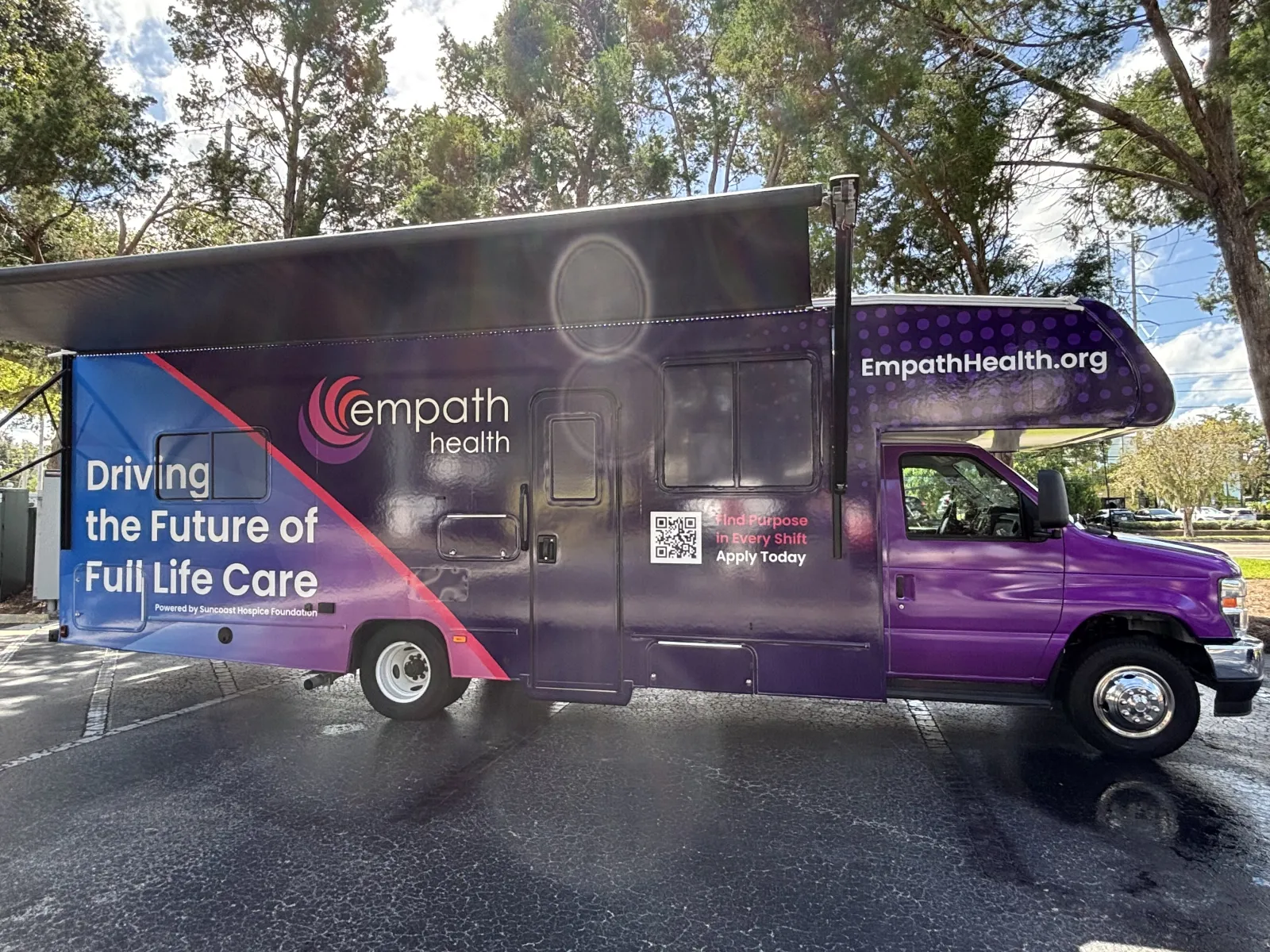
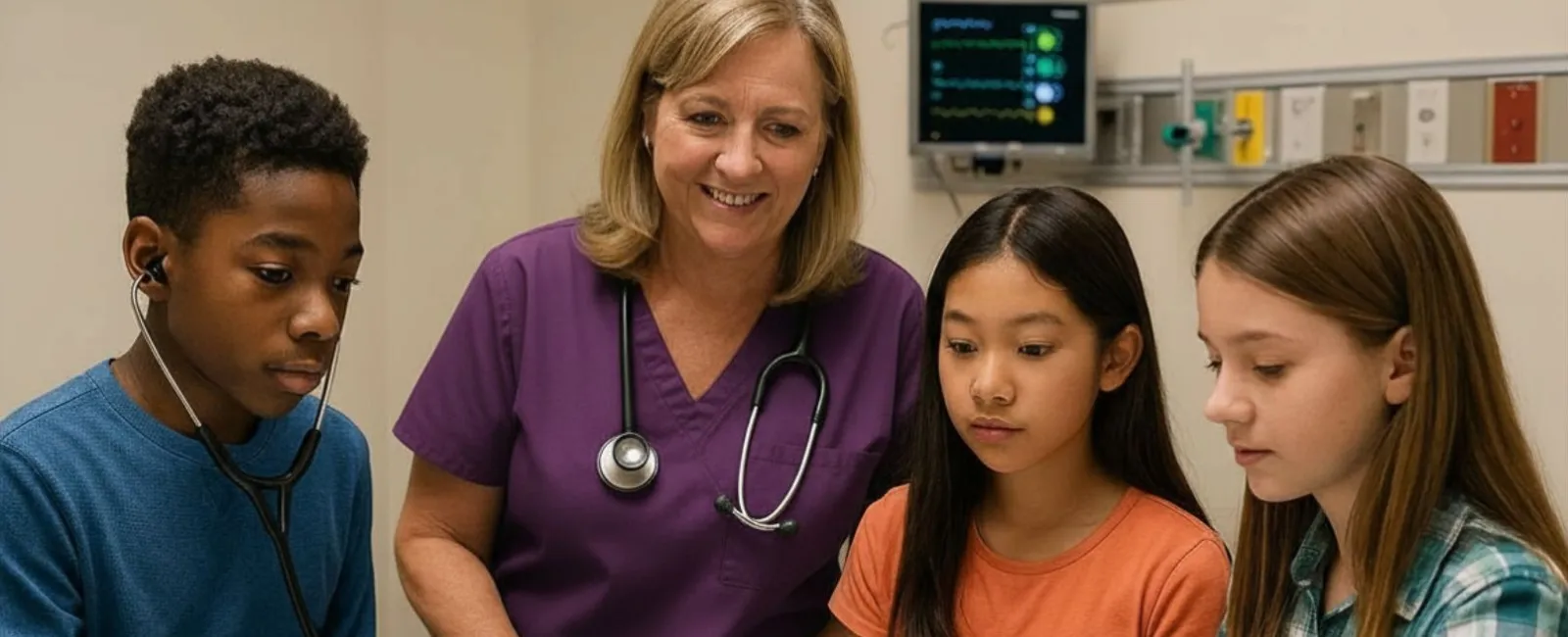
Most people don't picture middle schoolers checking blood pressure, counting respirations, or analyzing what might be causing a patient's shortness of breath. But that's exactly what happened when we brought Empath Health's Mobile Simulation Unit to a group of eighth graders earlier this year.
We didn't start with hospice care. We started with the basics: PPE, wound prevention, lung sounds, and collaborative problem-solving through an escape‑room‑style patient scenario. What surprised me wasn't their skill; it was their curiosity.
They leaned in. They wanted to understand the physiological signs the manikin was displaying. They worked as a team to identify what might help the patient breathe better.
They weren't intimidated—they were energized.
That curiosity is the spark we're working to protect and grow.
By the time a student starts thinking seriously about career paths, their impressions of healthcare—and especially hospice—are often already shaped. Many young people still believe hospice is a place rather than a specialty, or that it focuses only on dying rather than dignity, comfort, and whole‑person support.
When students meet us early, they see something different. They learn that hospice is an interdisciplinary team, filled with nurses, certified nursing assistants, therapists, social workers, chaplains, and volunteers, all working toward making someone's final chapter meaningful for both the patient and their family.
They learn that hospice care isn't about giving up hope; it's about redefining what matters most.
I wish more teens understood that working in hospice is a gift. We have the privilege of walking alongside patients and families during one of the most significant moments of their lives. Yes, the work can be emotionally demanding, but it is also profoundly rewarding.
What's fascinating is how these early impressions compare with what we hear from new nurse residents entering the hospice field. Many choose hospice because of a personal experience—watching a hospice team care for someone they love. What surprises them most isn't the emotional weight of the work; it's the support they receive. They rarely expect the level of interdisciplinary collaboration, the structured onboarding, or the safety net that surrounds them from day one in a hospice nurse residency program.
That's why starting early matters. Not because every eighth grader will become a hospice nurse, but because early exposure creates understanding, empathy, and the confidence to explore healthcare careers they may not have considered. It opens the door to meaningful conversations about quality of life, compassion, and what it means to care for people at their most vulnerable.
And for the students who feel that spark—for the ones who can see themselves in this work even before they can name it—the seed is planted. Sometimes, that's all it takes.
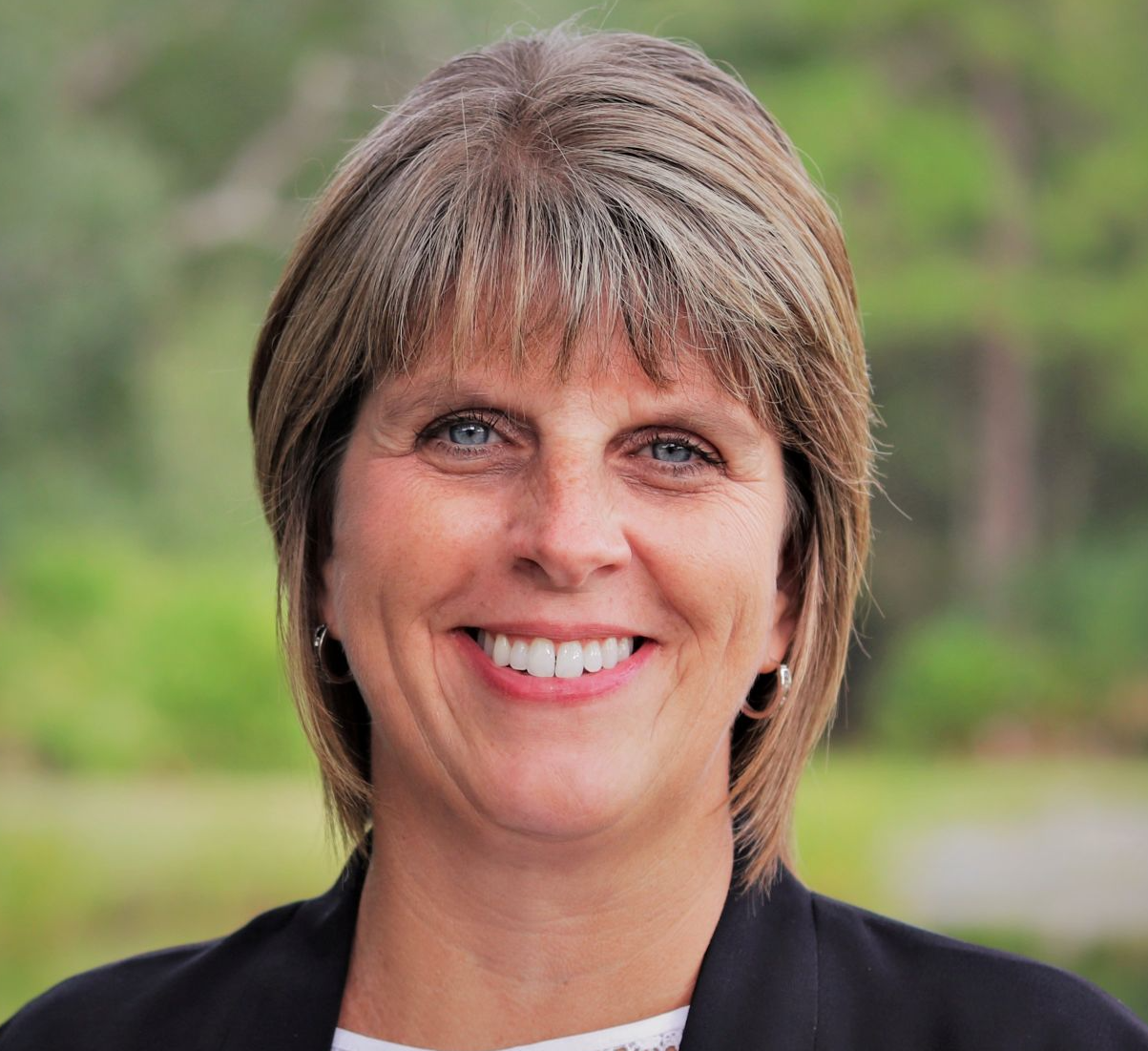
Anita Smith, MSN, RN, is the Director of Nurse Residency & Academic Partnerships at Empath Health. A nurse for more than 35 years and a longtime nursing professor, she helped lead the nation's first accredited hospice‑only nurse residency program and remains dedicated to preparing the next generation of clinicians through mentorship, simulation, and innovative curriculum design.